
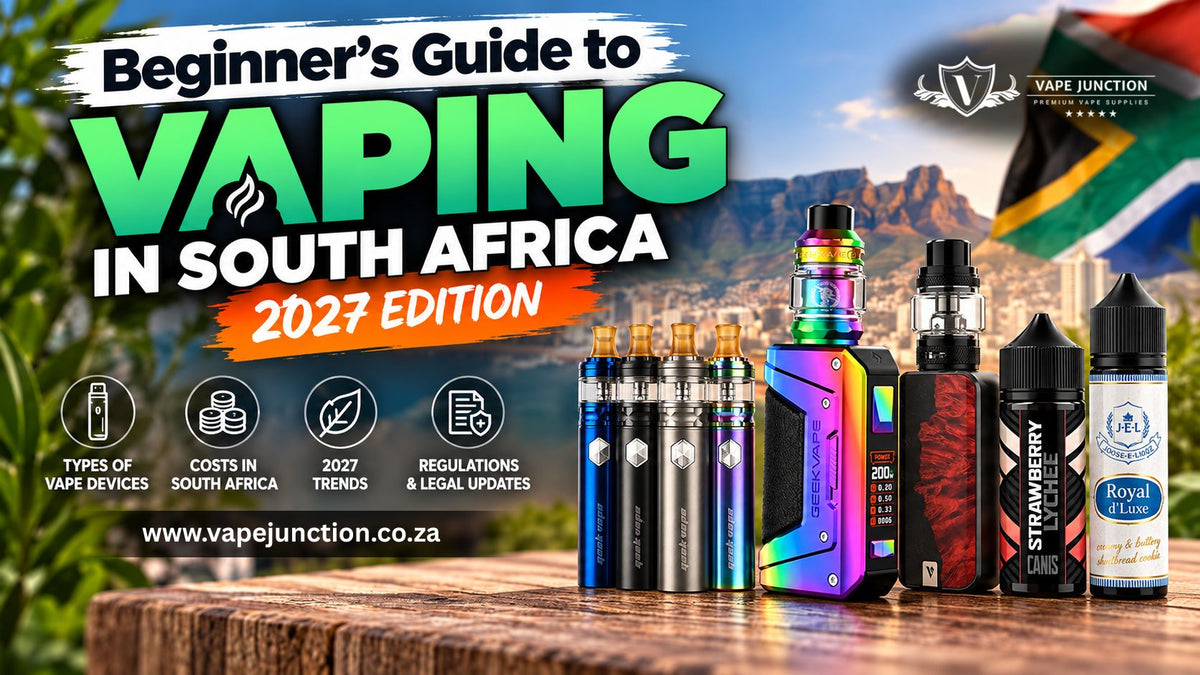
Vaping devices have changed considerably in recent years. Refillable pod systems and rechargeable designs now offer more choices than traditional disposable devices. At the same time, questions about nicotine safety, product costs, and environmental waste have become increasingly important.
For adults researching vaping for beginners, understanding the technology and its risks matters more than following the latest trends. This updated vape guide explains how electronic cigarettes work, what distinguishes different devices, and which developments South African consumers should watch during 2027.
What Is Vaping and How Does It Work?
Vaping involves using an electronic device to heat a liquid into an aerosol that can be inhaled. The device usually contains a battery, heating coil, and reservoir for e-liquid.
Unlike traditional cigarettes, electronic cigarettes do not burn tobacco. However, vaping aerosol is not simply harmless water vapour. It can contain nicotine, fine particles, and potentially harmful chemicals.
Most e-liquids contain the following ingredients:
-
Vegetable glycerin (VG): Helps produce aerosol and influences liquid thickness.
-
Propylene glycol (PG): Carries flavourings and affects the inhalation sensation.
-
Flavourings: Produce different taste profiles.
-
Nicotine: An addictive substance found in many but not all e-liquids.
The amount and composition of the aerosol depend on the device, liquid, and operating conditions.
Understanding the Different Types of Vape Devices in 2027
Anyone researching vape devices will encounter several designs. Each uses similar basic technology but differs in construction, maintenance, and environmental impact.
-
Disposable Vape Devices
Disposable vape devices generally contain a built-in battery and prefilled liquid reservoir. They are intended to be discarded once they reach the end of their usable life.
Some disposable products have rechargeable batteries, but that does not necessarily mean their liquid reservoirs can be refilled.
Their main environmental disadvantage is that batteries and electronic components can become waste after relatively short periods of use. Disposal methods also depend on available local recycling facilities.
-
Refillable Pod Systems
A refillable vape uses a rechargeable battery and a pod or cartridge that can be replenished with compatible e-liquid.
Interest in refillable designs may remain relevant during 2027 because they reduce the need to discard an entire device after the liquid runs out.
However, the environmental benefit depends on how long the device lasts and how its components are handled.
-
Advanced Vape Mods
Advanced vape mods are electronic devices with additional controls. Certain models allow changes to operating power, airflow, and other settings.
These designs typically require greater technical understanding. Incorrect battery handling or incompatible components can introduce additional risks.
-
Electronic Cigarette Devices
The term electronic cigarette or e-cigarette is a broad description rather than one specific product type. It can include compact pod systems, disposable units, and other electronic nicotine delivery devices.
Consumers researching e-cigarette devices should compare technical specifications rather than assuming all products function in the same way.
What Vaping Trends Could Shape South Africa in 2027?
The vaping sector could experience further changes during 2027. Some developments are already visible in device technology and international policy discussions. Their adoption in South Africa will depend on market conditions, legislation and consumer behaviour.
-
Greater Attention to Refillable Systems
Refillable systems may receive more attention as consumers compare recurring expenses and electronic waste.
These products also raise practical considerations. Pods need maintenance and replacement. Recharging requires suitable equipment. Compatible components must be used according to manufacturer instructions.
-
More Focus on Battery Safety
Battery design and protective features could become more prominent in product comparisons.
Devices may include protections against overheating, short circuits and overcharging. The presence of a safety feature does not eliminate risk. Product quality and proper handling remain important.
-
Increasing Environmental Scrutiny
Disposable electronics create environmental challenges because they combine plastics, metals, liquid residues and batteries.
During 2027, the vaping industry may face greater scrutiny over product disposal, recyclability and battery waste. South African consumers should follow applicable local waste management guidance rather than putting lithium batteries into ordinary waste streams.
-
More Attention to Product Transparency
Ingredient disclosure, manufacturer information, product authenticity and safety warnings are important topics for electronic cigarette regulation.
Consumers should distinguish verifiable manufacturer information from unsupported advertising claims. Labels such as premium or safe do not independently establish product quality.
How Much Does a Vape Cost in South Africa?
The answer to how much is a vape depends on the device category, manufacturer, retailer and applicable taxes.
The vape price in South Africa can also change as a result of excise duty adjustments, import costs and product availability.
Costs can be divided into several categories:
-
Initial device cost: The price of the electronic unit.
-
Recurring consumables: Replacement pods, coils or compatible liquids.
-
Maintenance costs: Replacement components and charging accessories.
-
End-of-life costs: Safe handling or recycling where facilities are available.
A proper cost comparison should consider both the initial purchase and ongoing expenses. No device category is automatically the least expensive under all usage conditions.
South Africa already applies excise duties to vaping products. The South African Revenue Service has also stated that changes to excise duty rates will take effect on 1 April from the 2027 Budget onward. This does not establish what the actual 2027 rates will be.
South African Vaping Regulations: What Could Change in 2027?
South Africa's regulation of electronic delivery systems is an important topic to follow.
As of the latest verified parliamentary developments in 2026, the Tobacco Products and Electronic Delivery Systems Control Bill (B33-2022) remained under consideration.
The proposed legislation addresses matters including:
-
Restrictions on sales and distribution.
-
Advertising and promotional practices.
-
Product packaging and labelling.
-
Restrictions involving children.
-
Manufacturing and product standards.
In June 2026, the parliamentary health committee supported the desirability of the Bill. Clause-by-clause deliberations began in August 2026.
These proceedings do not mean that every proposed restriction is already legally enforceable.
Before publication or further revision in 2027, the current parliamentary status and applicable legal requirements should be checked using official South African government sources.
Understanding Nicotine and Health Risks
Nicotine is an addictive chemical that can affect the cardiovascular and nervous systems. Exposure is particularly concerning for adolescents and during pregnancy.
Some vaping products contain nicotine while others are labelled nicotine-free. Product composition should not be assumed solely on the basis of advertising.
Vaping generally exposes users to fewer combustion-related toxicants than smoking cigarettes, but this does not make it harmless.
Long-term health effects remain an area of continuing research. People who do not smoke should not begin using nicotine products. Adult smokers seeking to quit should consider evidence-based cessation support through qualified healthcare professionals.
Common Beginner Misunderstandings
A reliable beginner's guide to vaping should explain misconceptions as well as device features.
-
Assuming Aerosol Is Harmless
Vaping produces an aerosol rather than ordinary water vapour. That aerosol may contain harmful substances even when the product does not contain nicotine.
-
Confusing Rechargeable and Refillable
A rechargeable device contains a battery that can be charged again. A refillable device allows its e-liquid reservoir to be replenished. These features are different and may not occur together.
-
Ignoring Battery Instructions
Incorrect chargers, damaged batteries and exposure to extreme heat can create safety problems. Manufacturer instructions should be followed and damaged equipment should not be used.
-
Believing All Products Are Equivalent
Devices differ in their electrical systems, construction, liquid compatibility and manufacturing standards. Similar appearances do not guarantee similar performance or safety characteristics.
Frequently Asked Questions About Vaping in South Africa
Q1. What is vaping?
Vaping is the use of an electronic device that heats liquid into an inhalable aerosol. The liquid may contain nicotine and flavourings. Vaping carries health risks and is not recommended for people who do not smoke.
Q2. What types of vape devices are available?
Common types include disposable devices, refillable pod systems and advanced mods. These differ in maintenance requirements, battery design and component compatibility.
Q3. Are refillable vapes becoming more relevant in South Africa?
Refillable devices may remain a prominent topic in 2027 because of interest in ongoing costs and electronic waste. However, there is insufficient evidence here to claim a specific increase in South African sales or market share.
Q4. How much is a vape in South Africa?
Prices vary by device type, brand and retailer. Buyers should distinguish initial hardware costs from ongoing costs for consumables and replacement components. Current Rand prices should be checked before publication.
Q5. Is vaping safer than smoking?
Vaping generally involves lower exposure to many toxicants associated with burning tobacco, but it remains harmful and can cause nicotine dependence. It is not risk-free. The safest option for people who do not use tobacco is not to start vaping.
Q6. What vaping regulations may change in 2027?
South Africa's Tobacco Products and Electronic Delivery Systems Control Bill could affect sales, advertising, packaging and other requirements if enacted. Its legislative status must be verified before treating any proposed measures as law.
Q7. Can vape batteries be recycled?
Some battery and electronic waste components can be handled through appropriate recycling facilities. Availability differs by area. Lithium batteries should not be placed in ordinary household waste where separate collection is required.
Final Thoughts
The most important vaping developments for 2027 may involve refillable technology, battery safety, environmental responsibilities and changes in South African regulation.
For adults researching vaping technology, understanding product differences and health risks is more valuable than relying on marketing claims or predictions.
Vape Junction provides information about electronic cigarette products and device categories available in the South African market. Readers should verify product specifications and current regulations and seek qualified medical advice for questions about nicotine dependence or smoking cessation.

Leave a comment
This site is protected by hCaptcha and the hCaptcha Privacy Policy and Terms of Service apply.